Strings / United States

Best bass guitars for jazz: comparison and buying guide

Electric walking lines, soul and fusion: passive versus active.

Editorial selection · Club Gre2Jazz · Documentary review:

A Jazz Bass can cover many styles, and a bass for jazz does not need that model name. We compare two fretted four-strings: a passive Fender and an active/passive Yamaha. These are options for electric bass practice and performance rather than substitutes presented as acoustic double basses.

Compare the two options

ModelTechnical differenceA good fit if…
Fender Player II Jazz BassFour strings; two Alnico V single-coil pickups; passive controls.You want a passive bass for electric jazz, soul and funk.
Yamaha TRBX504Four strings; humbuckers; active/passive switching and active three-band EQ.You need onboard tonal adjustment for fusion and different bands.

The models and their trade-offs

01

You want a passive bass for electric jazz, soul and funk.

Fender Player II Jazz Bass
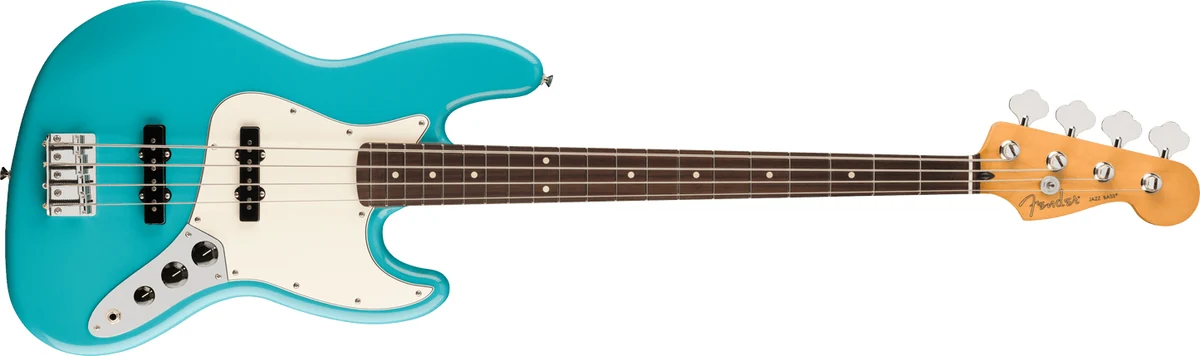
Fender Player II Jazz Bass · Aquatone Blue · 4 strings · rosewood fingerboard
Manufacturer photograph: Fender · Aquatone Blue · 4 strings · rosewood fingerboard.
Check price and availability on Amazon.com Variant: Aquatone Blue · 4 strings · rosewood fingerboard

Four strings; two Alnico V single-coil pickups; passive controls.

Why we would choose it

A useful passive reference: two volumes and a tone control make pickup blending easy to understand. Try neck feel and strap balance; Jazz is a model name rather than a restriction on musical styles.

When to choose something else

Single-coil pickups can pick up electrical hum, particularly with unequal pickup levels. Do not confuse Player II with Player II Modified Active or a fretless model.
02

You need onboard tonal adjustment for fusion and different bands.

Yamaha TRBX504

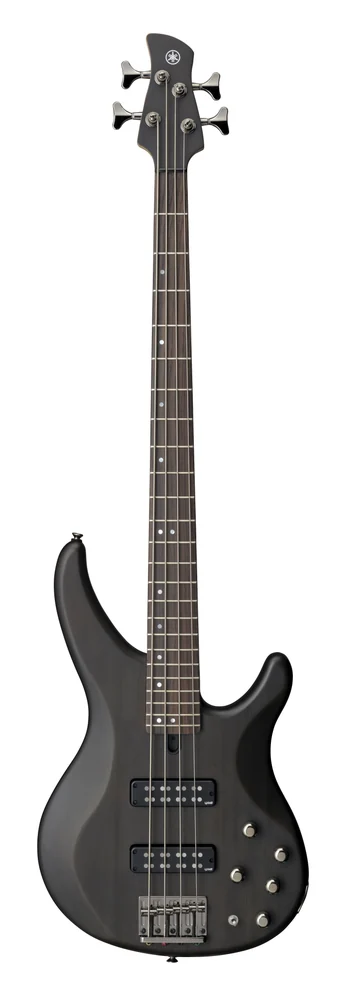
Yamaha TRBX504 · TRBX504 TBL · Translucent Black · 4 strings
Manufacturer photograph: Yamaha · TRBX504 TBL · Translucent Black · 4 strings.
Check price and availability on Amazon.com Variant: TRBX504 TBL · Translucent Black · 4 strings

Four strings; humbuckers; active/passive switching and active three-band EQ.

Why we would choose it

A shortlist option when the repertoire calls for changes from the bass itself. Active/passive switching is a functional difference from the Fender for players comfortable managing gain and EQ.

When to choose something else

If you prefer minimal controls, the electronics add decisions and a battery to maintain. Confirm four-string TRBX504: TRBX505 and TRBX604 are different references.

Amazon.com · USD. Confirm prices, availability, seller, delivery and included accessories on Amazon before buying.

Before you invest

Choose for the music you play.

01

Neck and balance

Try it seated and standing. Comfort during a repeated line matters more than a finish photograph.

02

Passive or active

Choose controls you understand. Active electronics require gain and battery management; passive setups rely more on the amplifier.

03

Frets, strings and amplification

Both references are fretted. If you want fretless slides and articulation, do not buy a fretted version expecting the same result.

Hear this instrument in jazz

Stanley Clarke

Stanley Clarke helps place electric bass within jazz and fusion. Listen to articulation and rhythmic function before choosing a tonal goal; we do not present him as a user of these models.

Artists are listening references for the instrument. Their inclusion does not mean they use, recommend or endorse the selected models.

Stanley Clarke · National Endowment for the Arts ↗

The reasoning behind our selection

Club Gre2Jazz editorial selections use manufacturer specifications and the musical use described. We have not physically tested these models. Recommendations are editorial judgements; we do not use Amazon customer ratings or reviews.

Your shopping store

United States · Amazon.com · USD. This edition links to the local store shown. Check delivery to your address, taxes and the seller's warranty.